
“If your 1:1 is only about the work, you’re missing the person—and the person is where the performance comes from.”
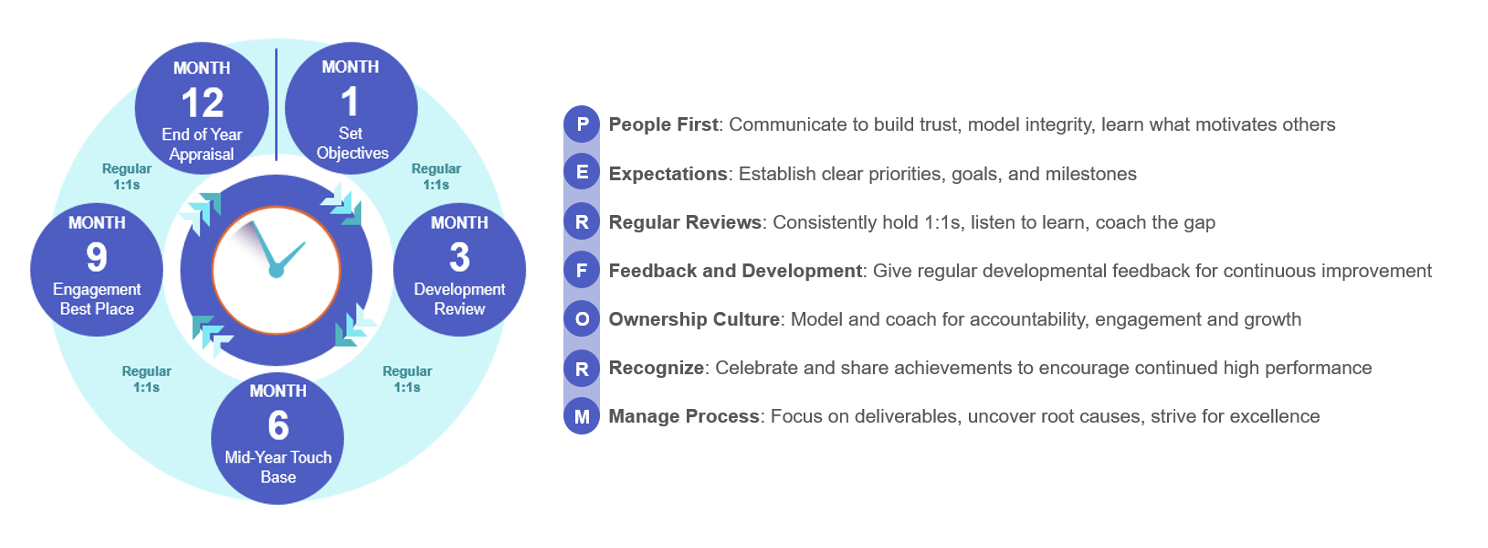
Performance Management Cycle
Most managers hold 1:1s—but far fewer use them effectively. Done well, they build trust, improve performance, and increase engagement. Done poorly, they become routine status updates that add little value.
Here are five simple ways to make your 1:1s count.
Tip #1: Use the Right Type of 1:1.
Not all 1:1s serve the same purpose. Think of them in three categories:
Core 1:1s (Performance & Goals): Set objectives, review progress, and conduct formal evaluations
Development 1:1s (Growth & Engagement): Focus on career goals, motivation, and development plans
Regular 1:1s (Execution & Support): Address day-to-day progress, roadblocks, and resource needs
Each type matters—but across all of them, the most important goal is building the relationship.
Tip #2: Create (and Share) an Agenda.
An agenda ensures both you and your associate come prepared.
Start by sending your discussion topics in advance. Then ask your associate to add theirs.
Even better—use a consistent 1:1 template to capture notes and track action items for follow-up.
Tip #3: Keep Ownership with the Employee.
It’s tempting to jump in and solve problems—but that can create dependency.
Instead, ask yourself:
“How can I coach them to solve this on their own?”
Use questions to guide their thinking and build accountability. Your goal isn’t to be the hero—it’s to develop one.
Tip #4: Never Cancel - Always Reschedule.
Things come up. Priorities shift.
But when you cancel a 1:1 without rescheduling, you send a message—whether you intend to or not.
Here’s the rule: if you need to move it, reschedule it immediately.
Consistency builds trust.
Tip #5: Build the Relationship.
This is the most important tip of all.
Start with a personal connection. Ask how they’re doing. Follow up on things they’ve shared. Acknowledge milestones. Say thank you.
People don’t just want to be managed—they want to be known.
Final Thought:
If you do nothing else, make your 1:1s a place where your associates feel heard, supported, and challenged. That’s where real performance begins.